
RIDICULOUS TO REALITY HOW DO WE PREDICT A FUTURE FOR THEMED ENTERTAINMENT? Part One: The Time Machine
[A three part series on Future Thinking for the Themed Entertainment Industry. Philip Drake - March 2024]
Part One: The Time Machine
“Any useful statement about the future should at first seem ridiculous”
Jim Dator – Futurist, Professor Emeritus, University of Hawaii
The part in which I conclusively predict the future.
There’s a question I’m asked a few times a year that has no clear or correct answer. Someone will ask me to predict the future.
It’s usually something like: “What attractions will my customers will be looking for in the future?” or “What’s the next big thing?” It’s a natural enough question because attraction owners want to invest in what will be successful for them in the future.
However, these kinds of predictions can never be certain. No one has an actual crystal ball and it’s impossible to anticipate all the changes and influences that come to bear on any society - or even any industry - and things like a global pandemic or a natural disaster can really throw off the best predictions anyway.
My most certain prediction is really that no prediction will ever be certain.
Which leads us to Future Thinking Basics
With that sad truth, there are however a few methods we can use to make some educated guesses or assertions about what might be a “big thing” in the future. If we apply them to our industry, they can at least begin to point us in a promising or “likely” direction.
Mainly they are methods that come that come from the core principles that futurists use, like these from Marina Gorbis at the Institute for the Future:
Forget about predictions, think about actions. The future doesn’t just happen to us. We have agency in imagining and creating the kind of future we want to live in, and we can take actions to get us there.
Focus on signals. Inflection points, signals of the future are all around us. Often these are inventions or developments that are on the margins. They may look weird or strange. They grab your attention and make you ask: “Why is this happening? What is going on here?” Look at the interconnection between technologies and society and economics and organizations.
Look back to see forward. There is no data about the future; the only data we have is about the past. We don’t repeat our history completely, but we do repeat patterns.
Uncover patterns. Aggregating signals and connecting these to the larger historical context helps us understand patterns of change.
Create a community. Bring together diverse people who can contribute their varied experiences and their differing knowledge. Thinking about the future is not a solitary affair. It requires a diversity of views. Involve experts from many different domains.
(Marina Gorbis, 2019)
Photo by Austin Chan
What’s the Next “Big Thing”?
So when I’m asked by a client about the next “Big Thing”, my answer has to depend on:
How much control they have in making their own future – making the future happen involves risk, and that seldom happens with large or fragmented company management. Can they pivot and refocus? Can they see a vision and manipulate their resources around to move towards it?
How much risk they are willing to take on - be it investing in R&D, prototyping, or a very long-range visioning.
It’s clearly not about determining an exact future. At its best, it’s about studying signals and patterns in the industry and as many adjacent industries as you can manage, and being open to imagining new possibilities.
Then of course it’s about taking steps to move towards it. Even if you let your dreams run wild for a minute and imagine some amazing future you want to live in. You can take actions to create it, or at least start the journey towards it and stay open to the possibilities that arise.
Go just around the corner – then push a little further out.
One of the easiest ways to start future-thinking is to try to imagine what is only just around the corner – that’s not too hard - but then push out a progression of that thought a little further.
In the short to medium term, we can start with we looking at current trends and try to understand if they are on the rise, on a plateau, or on the decline, and think deeply about where they will be one, three, or maybe five years. That time frame is usually not too difficult to imagine.
The next part is more difficult. For anything in decline over that timeframe, can you imagine it morphing into something else or just disappearing and making room for new ideas? What will be likely to replace it? What ideas fill the void in that space or need?
For example, at the time of writing there has been a lot of intertest in Video Game Properties becoming Location Based themed experiences. Looking ahead we would assume this will expand into much more immersive attractions, incorporating VR and with a strong feature on variable storylines and design-your-own adventures as developers try to emulate features of the online games.
Wild Things! Combining adjacent ideas:
What seemingly wild things might we be able to combine in the near future to make a new experience. Not long ago, robotic arms were only used in manufacturing of vehicles and industrial equipment. Now they are heavily featured in rides and even teamed with VR.
We’ve seen VR combining with Roller Coasters for a few years now, and water slides with aquariums; and more recently a Water Slide Ferris Wheel. These are combinations of ideas that find a way to fit together somehow. What else can we think to combine: AI and dining, gamification and queuing; haptics and water play, fast food and rides; sports and motion simulators, … the possibilities are almost endless.
Just imagine some crazy hybrid combo, and then see if you can actually find a scenario where you could make it work. It’s about saying these two things are kind of interesting but what happens if I were to combine these them – where can I apply that to my business or industry.
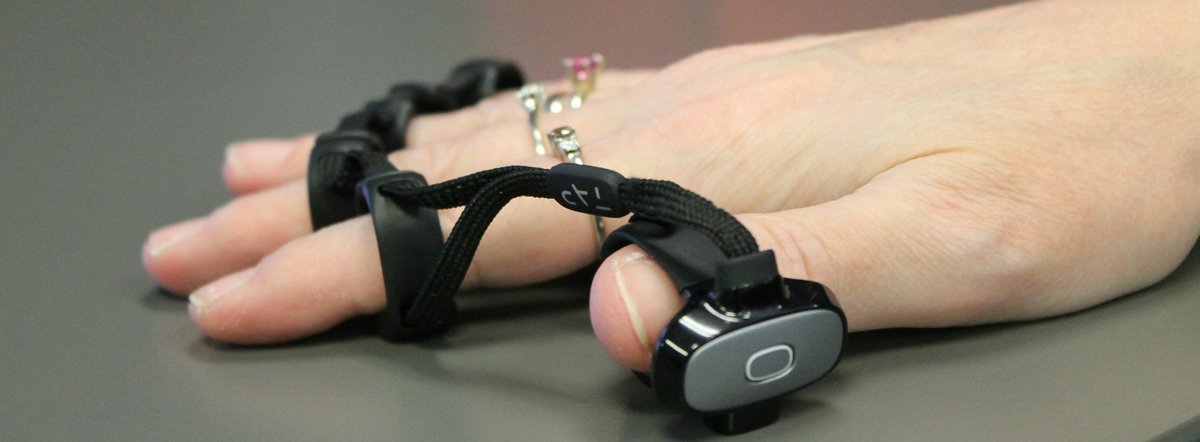
Photo by Elizabeth Woolner
The Joy of Marginal Technologies
The next step would be to look at those signals which say the future is already here. This might be small interesting things on the margins of the mainstream that grab your attention. Things that look interesting but so far are seen as odd or not fitting in. This is often about the interconnection between technologies and applications.
Sometimes these ideas pop up in news articles, research projects, science journals, stories from friends or colleagues or sometimes you’re looking at a product or service that is a good idea but not quite packaged up yet. It may also be a technology we can use now but seems only to be in the infancy of development and we need to think about how to potentially apply them to our future.
It’s about staying open to what futurists call zones of opportunity. Keep a watch on the most innovative tech articles and ask: “What can I do with this?”
Some things that have caught my attention lately:
Quantum computing is moving fast, but only just nudging into being commercially viable. Can we expect it could be widely available to all in five or ten years? Probably. So what could be done with it?
Technology that reads the biometrics signals on your skin.
Wearable glasses with a zoom and infra red function.
Personal assistant drones; and robot guides;
Large scale tactile virtual reality – “feeling” something you touch.
Seating surfaces that sense when someone is hot or cold and adjust just that part of the seat to make them comfortable. Similarly - dining plates that maintain a perfect temp zones for each individual diner – never too hot for a child, and a warm zone for the lasagna but a cold zone for the salad … on a single plate.
How about long range highly directional speakers that can target a single individual’s ears in a crowd and track with them as they walk - match that with directional microphones and you could carry on a conversation with a swimmer or football player without them needing any devices. Or listen to a concert at the level you want no matter where you are seated. At an airport or theme park you could get personalized PA announcement in your native language no matter where you are.
And finally, I have to say it - the beginnings of Space Tourism.
As far as I know, few of these technologies are being used in the themed attractions industries just yet, but it will just take the right motivation and business case.
We may know something about what’s in R&D now, but in an industry where almost every large project includes some first-time leading edge prototypes, we can’t always know what’s going to make if from the drawing board to the workshop – let alone into a theme park or attraction and in a form that looks like it will be commercially successful.
Plus there are always developments and combinations no-one has even considered yet, as new technologies or ideas arrive.
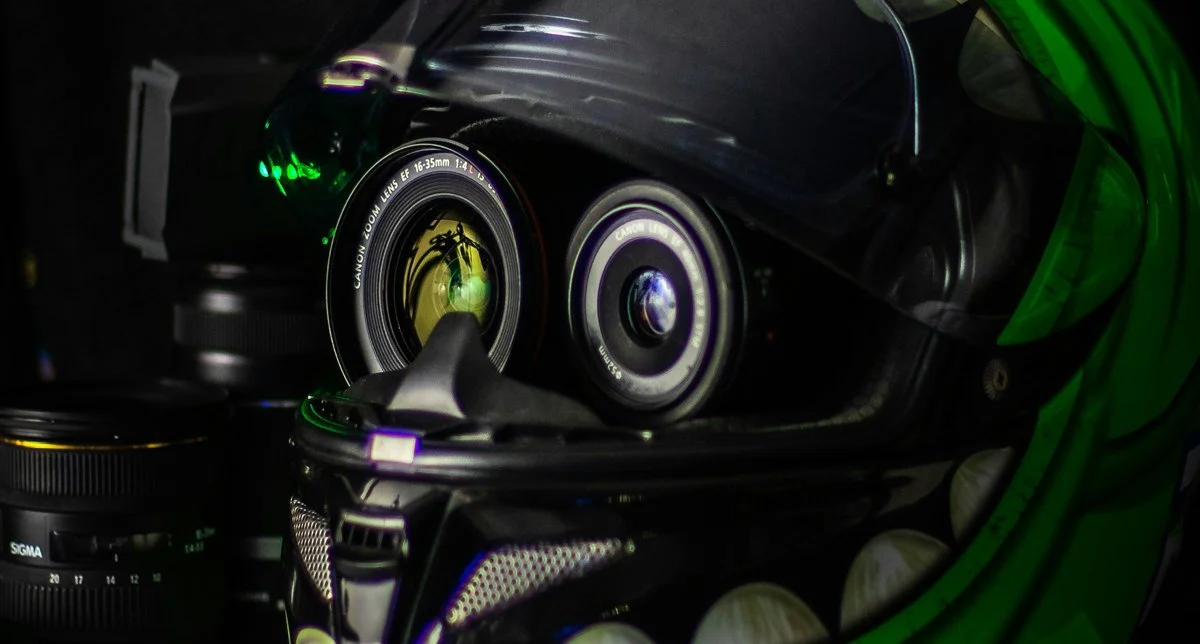
Photo by Conor Luddy
Bespoke Technologies
I have already mentioned combining technologies in unexpected ways and looking closely at marginal technologies for how they may be used in the future. The third leg of that technology tripod is in new technologies developed specifically for entertainment.
The themed entertainment industry has a history of adapting diverse technologies into the leisure and recreation – think roller coasters from railways, 4DX and motion simulators from pilot training, advanced ride control from manufacturing and even VR from various military origins. However, there’s a lot of technology that is developed specifically for themed entertainment, and always more on the horizon.
What is certain that AI, wearable tech, advanced AR and VR is only in it’s infancy for leisure and themed entertainment industries and the rate of change will accelerate quickly.
The rapid development of AI alone over the last year will no doubt mark this as a pivot point in technological development that we are yet to fully comprehend.
Much of what is in development is kept tightly under wraps of course, we sometimes see a hint when scanning patent applications, or teasers for upcoming projects, but we can apply future thinking methods to recent releases and make some assertions about where bespoke technologies may be taking things.
A lot of that might be around gaming and adjacent technologies to do with bringing the gaming world into a physical space, such as Disney’s HoloTile floor and connections to the Metaverse.
The next assertion must be around ways of curating your own experience, especially incorporating AI.
It seems like it is still early days for trackless ride vehicles, with a long way, and many opportunities, yet to be fully realized. Smaller, more responsive, more interactive and more accurate seem to be the main goals, but also dynamic interaction and rider control.
Higher and higher resolution screens are happening in multiple industries, but I think not too far away we will see vast improvements relating to hi-resolution large scale spherical theatre technology.
What’s next...
The point of all this future thinking is about opening up the conversation of the possibilities. As I said at the beginning there is no way to predict the future with certainty, just ways to observe, question, research, be open to possibilities and to make some educated guesses or assertions.
Of course some will point out the many things I’ve omitted or just disagree with my thoughts, and that’s OK, nothing about the future is finite or certain. The important thing is to think and question, and not to ignore it.
In Part Two I will take a closer look at the impacts of Climate Change, the future of Mega Parks, the Post-Pandemic Paradox, plus Inclusion as a Master Planning Strategy in: RIDING THE WAVE.